A wearable's advertised runtime usually belongs to a defined test, not to every possible day. Find the manufacturer's battery notes and read the activities, settings and connection conditions used. Apple's watch battery page, for example, describes a particular mixture of checks, notifications and other use. The useful information is the test pattern, not only the headline duration.
Write down your own intended pattern. Will you use the display frequently, record long activities, play audio or leave the phone behind? You do not need to predict exact battery consumption. You need to see whether your routine resembles the advertised scenario closely enough for the claim to be a useful starting point.
Compare like with like
Separate normal operation from a reduced-function power mode. Read which features change in that mode and whether they include the reason you want the device. A long runtime with important functions restricted may be useful for an occasional trip but less relevant to daily use.
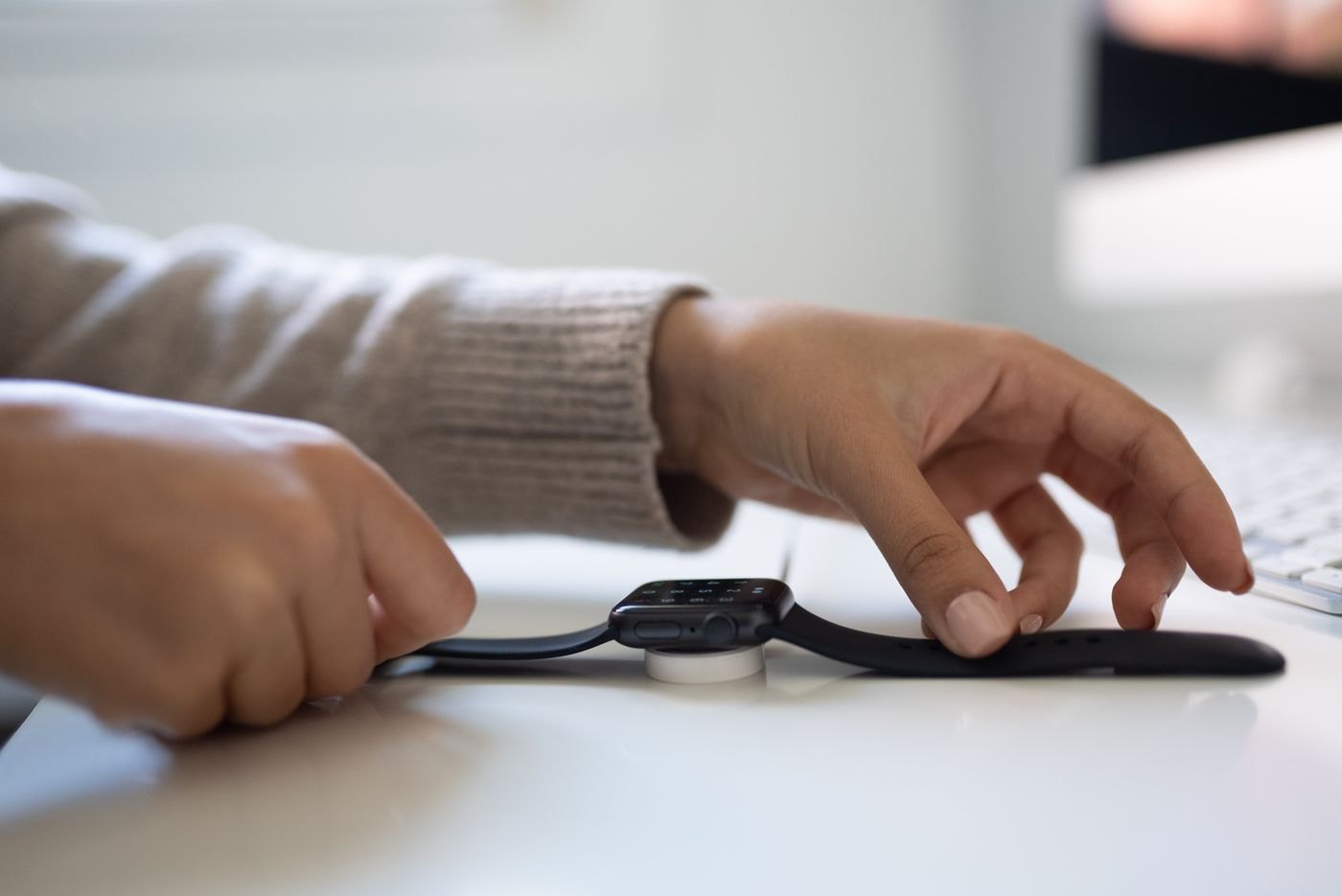
Check the charging claim too. The quoted time may depend on a particular cable, adapter, starting charge level and environment. Include the required equipment in the purchase plan. A stand that physically holds the watch is not proof that it supports the fastest charging mode.
For a used wearable, consider battery condition as another variable. A launch specification does not describe the present state of an individual device. Ask what can be checked through its supported settings and review the manufacturer's service options rather than assuming an older unit matches a new one.
Plan a repeatable charging opportunity
Choose a period when you do not need to wear the device and can charge it on an appropriate uncovered surface. If you want to wear it overnight, consider a daytime window. Avoid building the routine around a theoretical maximum that leaves no margin for a longer-than-usual day.
During the return period, observe several ordinary days and note the starting charge, major activities and remaining charge at the time you need it. This is a personal fit check, not a controlled review. Do not present one unusually light day as the device's guaranteed endurance.
If the observed routine does not work, decide whether a different charging habit is acceptable. Turning off every feature that motivated the purchase can reveal that another device is a better match. Runtime is valuable when the watch remains useful throughout the period you need it.
Keep a useful observation log
For three ordinary days, note when the watch leaves the charger and when you next expect to charge it. Add only the major differences: an unusually long activity, extensive audio use or a period away from the phone. The log should explain the day without becoming another task to manage every hour.
If a day ends with much less charge than expected, compare it with the others before changing several settings. Check the device's supported battery information and any recent software or application changes. A single anomalous day is a reason to investigate, not proof that the advertised figure is false or that the battery is defective.
When contacting support, report the model, software, charging equipment and observed pattern. Ask whether the behaviour is expected for that use and whether the device offers a supported diagnostic or service check. Clear observations lead to a more useful conversation than saying only that the battery is bad.