Identify the watch model and case size before ordering a band. A band width or a familiar brand name does not establish compatibility with every watch in a range. Some systems use conventional lugs, while others use proprietary connections. Consult the current manufacturer's compatibility information for the exact combination.
Apple's band instructions provide an example of size-specific compatibility and a locking attachment that must engage correctly. Do not generalise its size groups to another brand, or force a band into place because the listing described it as universal.
Fit includes your wrist and the closure
Check the stated wrist-size range and how it is measured. A fixed-size loop, a buckle and an adjustable clasp offer different amounts of adjustment. Use the manufacturer's measuring method and consider whether you can operate the closure comfortably with the opposite hand.
Look at the complete band length, including any overlap or tail. A strap that technically closes may leave an awkward amount of material tucked underneath. If you wear the watch under a sleeve, consider the clasp's bulk and whether it catches when you move your wrist.
Choose a material whose care instructions fit your routine. Read how the maker says to clean and dry it, and whether particular uses are excluded. Do not assume a watch's water-resistance rating applies equally to every decorative or leather band attached to it.
Check the attachment before wearing
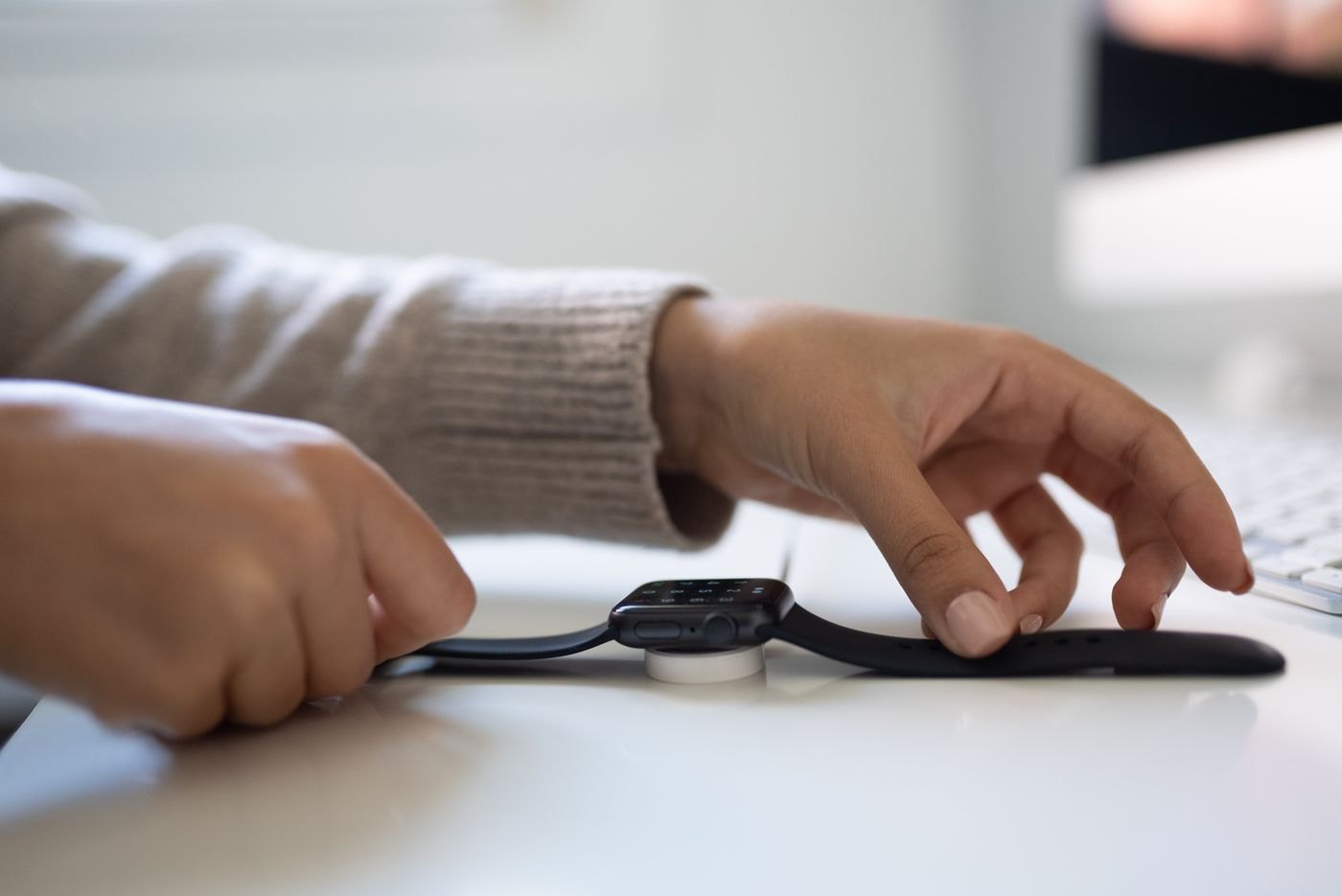
Work over a clean, soft surface so the watch is protected if a part slips. Follow the release and fitting instructions for the model. If a connection resists, stop and recheck orientation and compatibility rather than adding force or modifying the part.
Confirm that both ends lock as intended and that the closure holds. Apple specifically cautions against wearing a band that slides without its release being operated. For other systems, use their equivalent verification procedure. A band is a support for the device, so uncertain attachment is a reason to stop using it.
Retain the original band until the replacement has been checked in normal use. Keep any removed pins or small tools in a labelled container. If the attachment wears or becomes unreliable later, replace or service it through an appropriate route instead of treating repeated loosening as a harmless cosmetic issue.