Filming yourself puts the phone where you cannot always reach it. A tripod therefore needs to do more than stand up: it should hold the intended framing, leave the camera unobstructed and work with your recording controls. Begin by deciding whether the video will show your face, your whole body or a tabletop activity.
Set a phone temporarily in the intended location and use its camera preview to judge the view. This helps establish the required height and distance before you compare tripods. A compact desk support and a floor-standing tripod solve different framing problems.
Check the holder as carefully as the legs
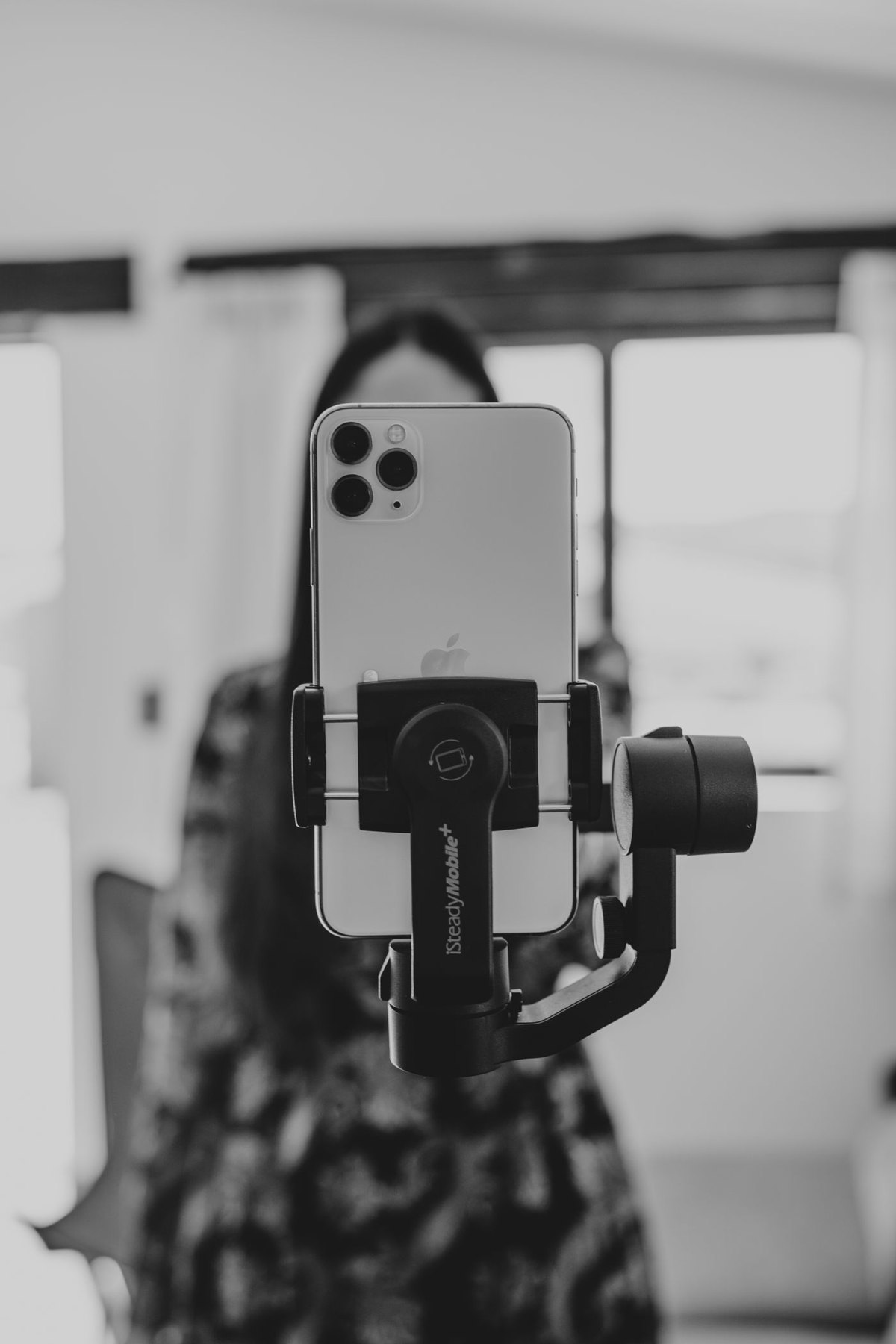
Read the holder's supported device dimensions and consider the case you use. The clamp should avoid pressing side buttons, and its shape should not obscure the lens you plan to use. Check whether portrait and landscape positions are supported in the way you expect.
If the holder and tripod are sold separately, verify the attachment specified by both makers. Do not assume every mounting plate or thread is interchangeable. Include the weight and position of any microphone or light that will be attached, and follow the support's stated limits.
Use the tripod on a suitable surface and arrange cables so they do not tug on the phone. A charging lead stretched across a walkway can make an otherwise stable arrangement inconvenient. Decide whether the recording can be completed without a cable rather than improvising tension around the support.
Rehearse one short recording
Record a brief sample from the actual position. Look at the framing, focus behaviour and sound before making a long take. A picture that looks correct while you are standing beside the phone may be different once you move into the scene.
Try the start and stop method too. If you use a remote, confirm that it works with the chosen recording application rather than only with a still-photo shutter. If you use an application timer, leave enough time to reach the intended position without rushing around the stand.
Keep the successful arrangement easy to repeat: note the tripod height, floor position or framing reference in a way that suits the room. You do not need permanent marks everywhere. One usable reference can save several rounds of adjusting the phone the next time you record.