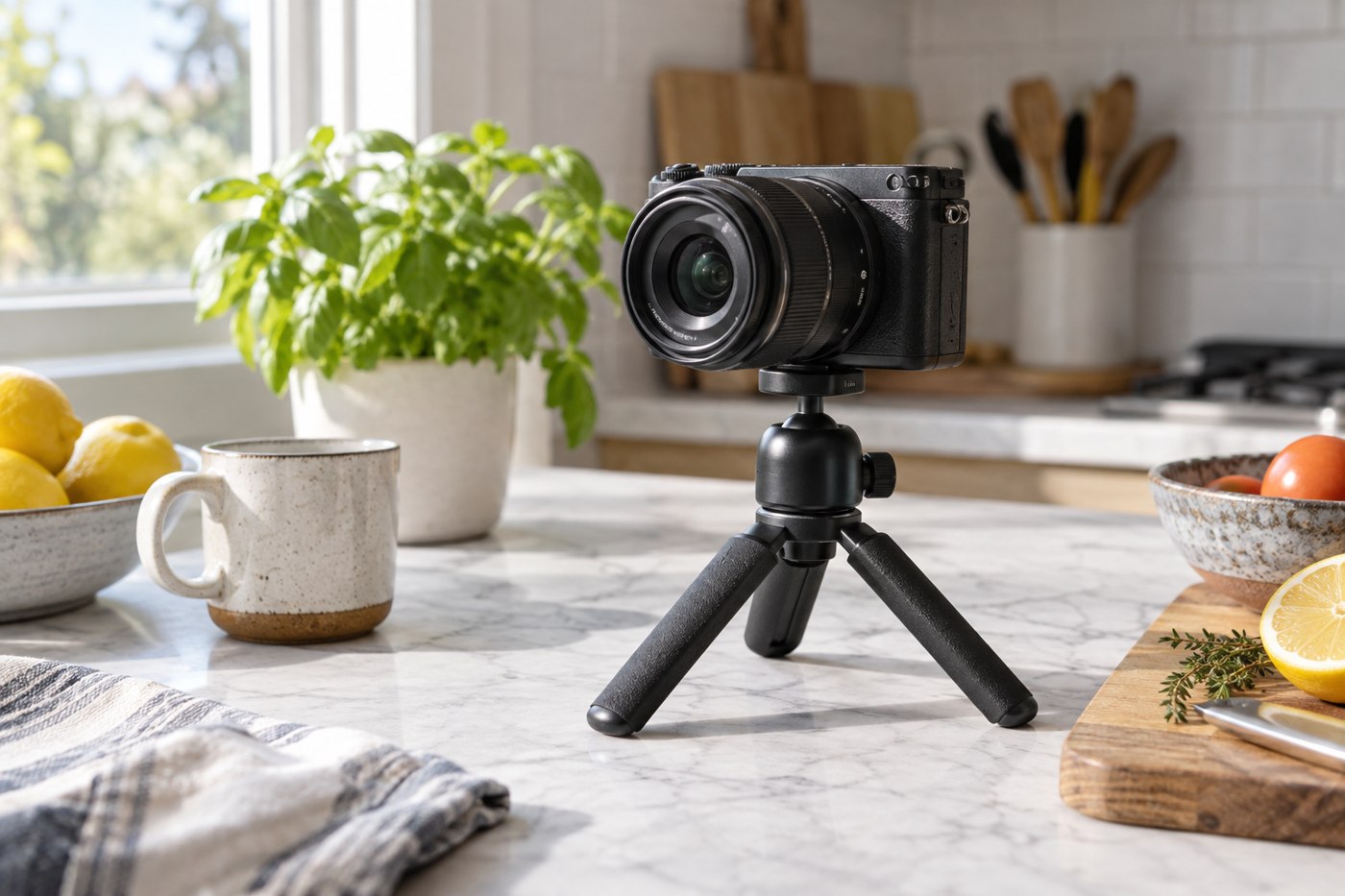
Start with the photograph you want to make. Place the product on the table and estimate where the camera needs to sit to show it correctly. A tripod that is compact in a bag may spread its legs across the entire working surface when opened. Measure that footprint, including the room needed for your hands and any lights.
Weigh the complete supported setup rather than the camera body alone. Include the lens, plate and attached accessories. Compare the manufacturer's load and use guidance, but also consider how the weight is positioned. A long lens or an accessory projecting to one side can create a different arrangement from a compact camera centred above the support.
Test the angle without risking the camera
Read how the head locks and how the camera attaches. Check that the mounting screw and plate suit the camera, and that the plate does not prevent access to a battery or card door you will need. Begin with the support low and on a stable surface. Keep a hand supporting the camera while you verify that each lock holds.
For overhead work, do not assume a normal tabletop tripod is designed to hold the camera far beyond its legs. That changes the balance. Use equipment explicitly intended for the position and follow its setup instructions; a makeshift extension can place the camera outside the stable footprint.
Check the table itself. A lightweight folding surface can move when you touch a keyboard or lean against it. Take a short test sequence while performing the actions you expect during the shoot. If the frame moves, separating the camera support from the work surface may be more useful than buying a taller version of the same tripod.
Look for repeatability
Mark the product's position with removable tape outside the final frame and note the camera height and angle. This helps when you need another photograph later. A tripod head that can be adjusted precisely may matter more than a large range of dramatic angles you rarely use.
Finally, check how the tripod folds with the plate removed or left attached. Store any required tightening tool with it. Small supports are easy to carry, but a missing plate can make the entire kit unusable. Keep the setup within the manufacturer's intended use and choose a larger support when the shot genuinely needs one.