Before the event, agree what the receiving person needs: every original, a selected set or finished exports. Those are different handovers. If the editor needs camera originals, a folder of smaller messaging-app copies will not fulfil the same purpose. Record the expected file types and whether audio or video recorded alongside photographs is included.
Assign each card a short identifier and connect it to its contributor. A simple note might say Card B, second camera, afternoon session. This is enough to investigate a missing section later without relying on a filename that another camera may also generate.
Keep contributors separate during the first copy
Create a folder for each contributor or card before combining material. Cameras can produce identical filenames, so placing everything into one folder can create overwrite prompts or confusing renames. Preserve the original names inside clearly identified folders until the collection has been checked.
The person copying should record the destination and any error messages. Keep the card unchanged during this stage. If a transfer stops, mark it incomplete and investigate before moving on; a partially filled destination folder can otherwise look convincing to someone who did not watch the operation.
Open sample files from each card's destination, including the beginning and end of long recordings. Compare the expected count and check whether the contributor recalls material from another card or device. A count alone cannot establish that every meaningful part of the event was included, but it is a useful prompt for that conversation.
Return cards only after the agreed check
Define who can authorize card reuse. The owner should not have to guess whether an editor has made a backup. Send a concise confirmation describing what was received and where responsibility passes, without exposing private event material in the message.
Keep personal photographs outside the handover if they share the card. Agree a selection process that preserves the event files without copying unrelated material unnecessarily. Do not browse or distribute contributors' private folders simply because the card is accessible.
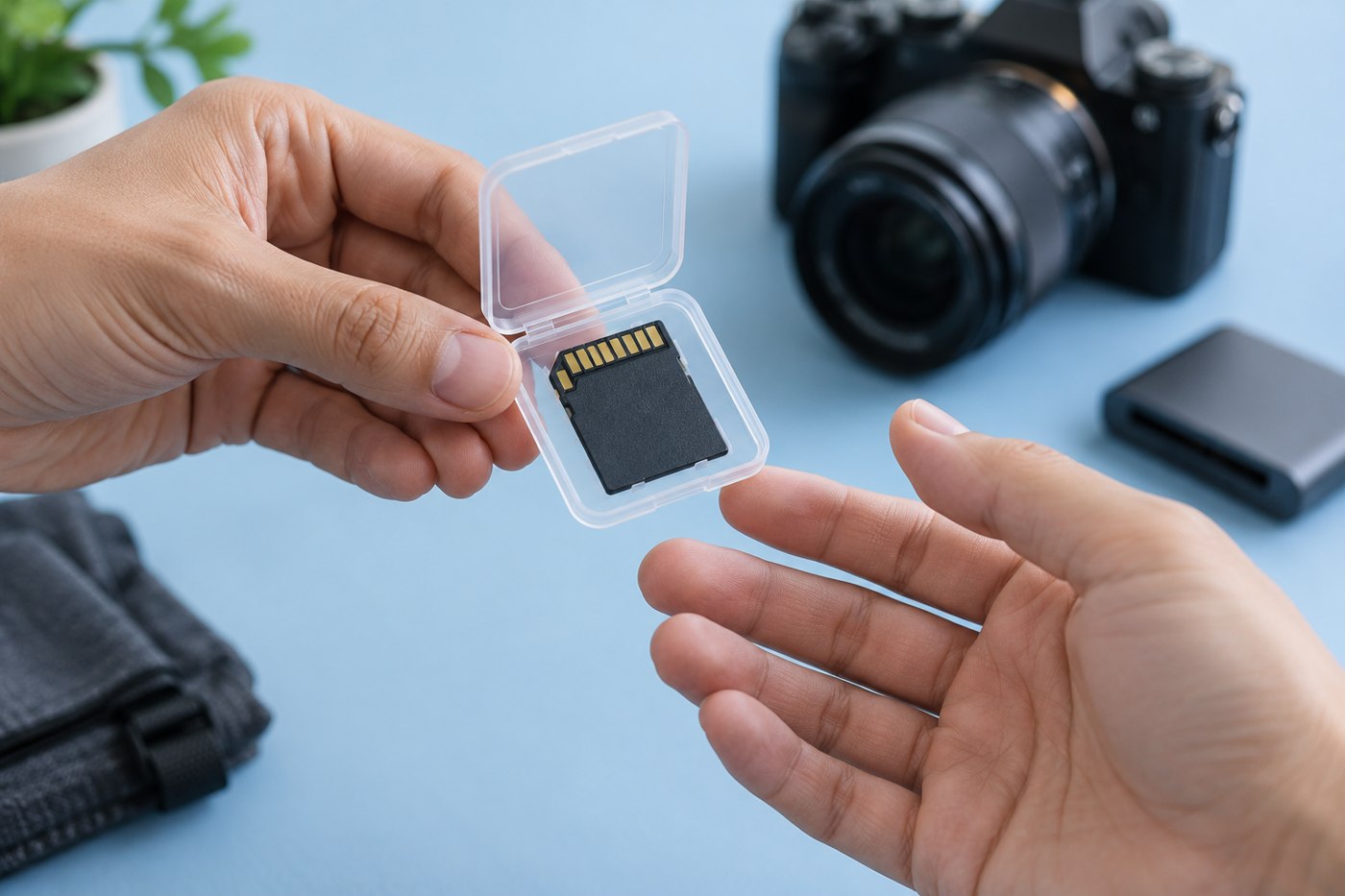
When the cards go back, count them against the identifiers and make clear which are safe for the owner's normal preparation process. This last physical check matters: a complete digital collection does not help someone whose card remains in another person's reader when they leave for the next assignment.