Gather the household's wearable accessories and sort them by the device they fit. Include chargers, bands, tools and spare parts. Similar-looking magnetic pucks or straps may belong to different models, so identify them through the manufacturer's model information rather than trying each one indiscriminately.
Label storage positions with a person's name or device model, whichever makes the arrangement clearer. Keep the label on the organiser or cable area where it does not cover safety information, interfere with contacts or change the fit of an accessory. A small card listing the exact model can be more useful than colour alone.
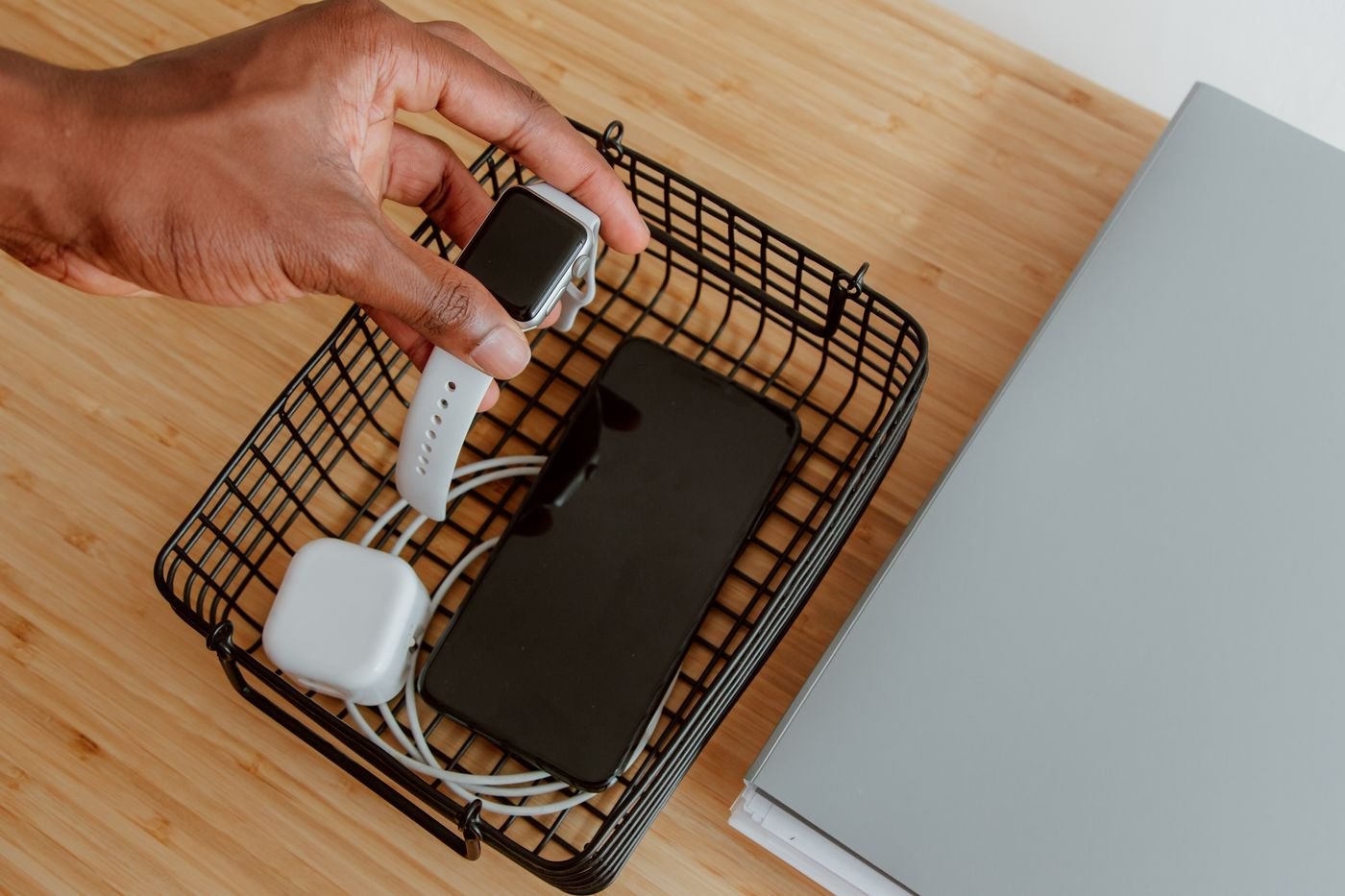
Place the everyday charger where its owner can connect the device without moving everyone else's equipment. Route leads so lifting one watch does not pull another charger off the surface. Follow each product's power and ventilation instructions, and avoid covering charging equipment with the spare bands stored nearby.
Keep alternate bands clean and dry according to their care instructions before putting them away. Store small pins or tools in a closed, labelled compartment rather than loose in a shared tray. Record which band uses which attachment so a borrowed tool or part does not disappear into another kit.
Create a separate place for damaged or unidentified accessories. Do not return them to the daily-use compartment where someone may assume they are ready to use. If a cable or charger is visibly damaged, replace or service it through an appropriate route instead of keeping it as an emergency spare.
Agree that someone taking a travel charger says which one they borrowed and returns it to its marked place. This is especially useful when a home stand has a removable cable hidden inside it. The person left at home should not discover the missing part only when their own watch needs charging.
Review the collection when a device is sold or replaced. Keep accessories that have a verified use with another model and label them accordingly. Remove obsolete parts from the active tray so the next purchase does not add to an expanding set of uncertain connectors.
A quick visual check should reveal what is absent. The purpose is not a perfectly arranged drawer; it is avoiding a morning spent searching for the one compatible charger among several almost identical pieces.