A headphone amplifier is useful when it addresses a specific compatibility or output requirement. It is not an automatic upgrade for every pair of headphones. Begin by describing the problem: insufficient level, audible noise, an inconvenient volume control, missing connections or dissatisfaction with the headphone's sound. Those symptoms do not all point to the same solution.
Check the headphones and source you already own. Confirm the selected output, application level and any accidental processing setting. Try a known suitable source where possible and compare at a comfortable level. If the problem occurs with only one damaged cable or one recording, an amplifier may add equipment without addressing the cause.
Read impedance with sensitivity
Shure's specification guidance explains that impedance is not a sound-quality ranking and discusses sensitivity as a separate specification. Do not use a single ohm threshold as a universal rule that headphones need an amplifier. Compare the headphone manufacturer's requirements with the output device's documented capabilities, asking the makers about a specific combination when the information is incomplete.
Sensitivity figures can be expressed with different references. Avoid comparing two numbers as though their units were identical when one specification uses a different measurement basis. If the listing omits the conditions, treat the comparison as unresolved rather than filling the gap with a confident calculation.
Separate conversion from amplification
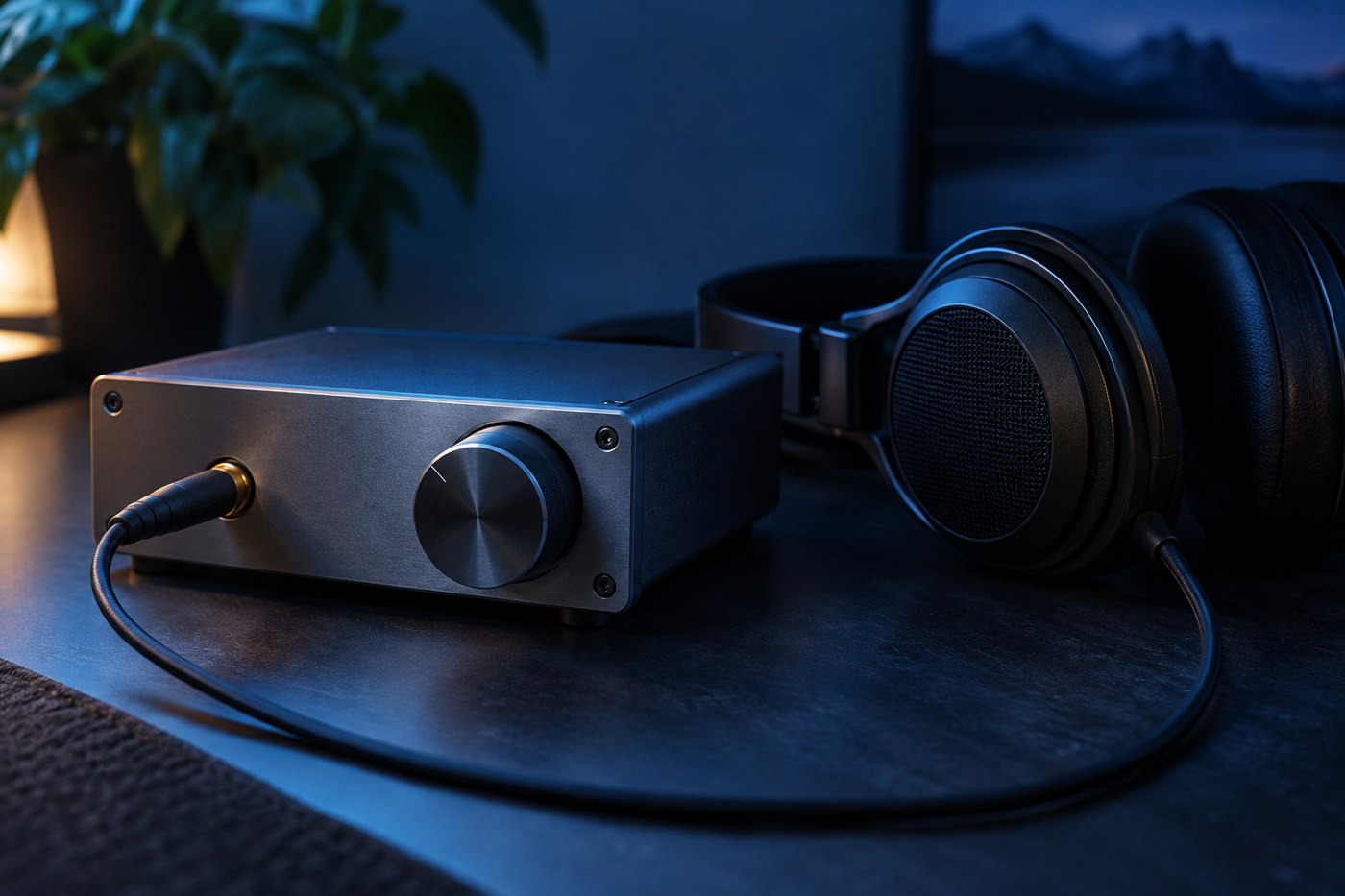
Some products combine digital-to-analogue conversion with a headphone amplifier, while others accept an analogue input from equipment that already performs conversion. Identify what your source provides and what the proposed device expects. A USB socket, line input and headphone output are different roles even if several appear on one small box.
If the goal is to replace a noisy computer output, establish which part of the path the new device bypasses. If the goal is a convenient desktop volume knob, that is a valid requirement of its own. Neither should be disguised as a promise that every recording will sound more detailed.
Check the supported headphone connection
Match the headphone cable and output type exactly. Do not assume balanced and conventional single-ended outputs can be interchanged through any adapter that fits. Follow the amplifier and headphone manufacturers' approved cable arrangements, and reduce volume before connecting or changing equipment.
Consider the practical controls: a gain switch, volume range and output selector should be understandable and accessible. A device that becomes very loud with a tiny movement of the knob may be inconvenient for your particular headphones even if its maximum output looks impressive.
For a useful comparison, start with the amplifier's level low and adjust carefully to a similar comfortable loudness to the original source. Use the same passage and keep optional equalization or effects consistent. This does not create a laboratory test, but it reduces the chance that a volume difference dominates your impression.
Check quiet passages as well as louder ones. Listen for unwanted noise at the settings you actually use and assess whether the volume control gives you a convenient adjustment range. A device designed for much more demanding headphones may offer capabilities you never need while adding a power supply and another cable to the desk.
If the amplifier also includes a digital converter, test the host connection after sleep and confirm the operating system selects the intended output. The audio electronics may be compatible while the daily computer routine remains inconvenient. Keep that practical result in the decision alongside any listening preference.
Retain the original configuration until the new arrangement has met the stated goal. That gives you a reference and makes it easier to return to a simpler setup if the added device does not solve the problem that prompted the purchase.
Test the reason you bought it
Suppose the original problem was that a compatible pair could not reach your ordinary listening level from a particular source. Test that requirement with the same material, then assess noise and control at normal use. Do not make a louder comparison and call the difference a quality improvement simply because loudness changed.
If the complaint was the headphone's fit, tonal preference or isolation from the room, compare other solutions as well. An amplifier does not change the ear-cup shape or make an open enclosure closed. Buy the additional device when its documented function solves the identified limitation and the complete connection is compatible. Otherwise, retaining a simpler setup is a perfectly useful outcome.