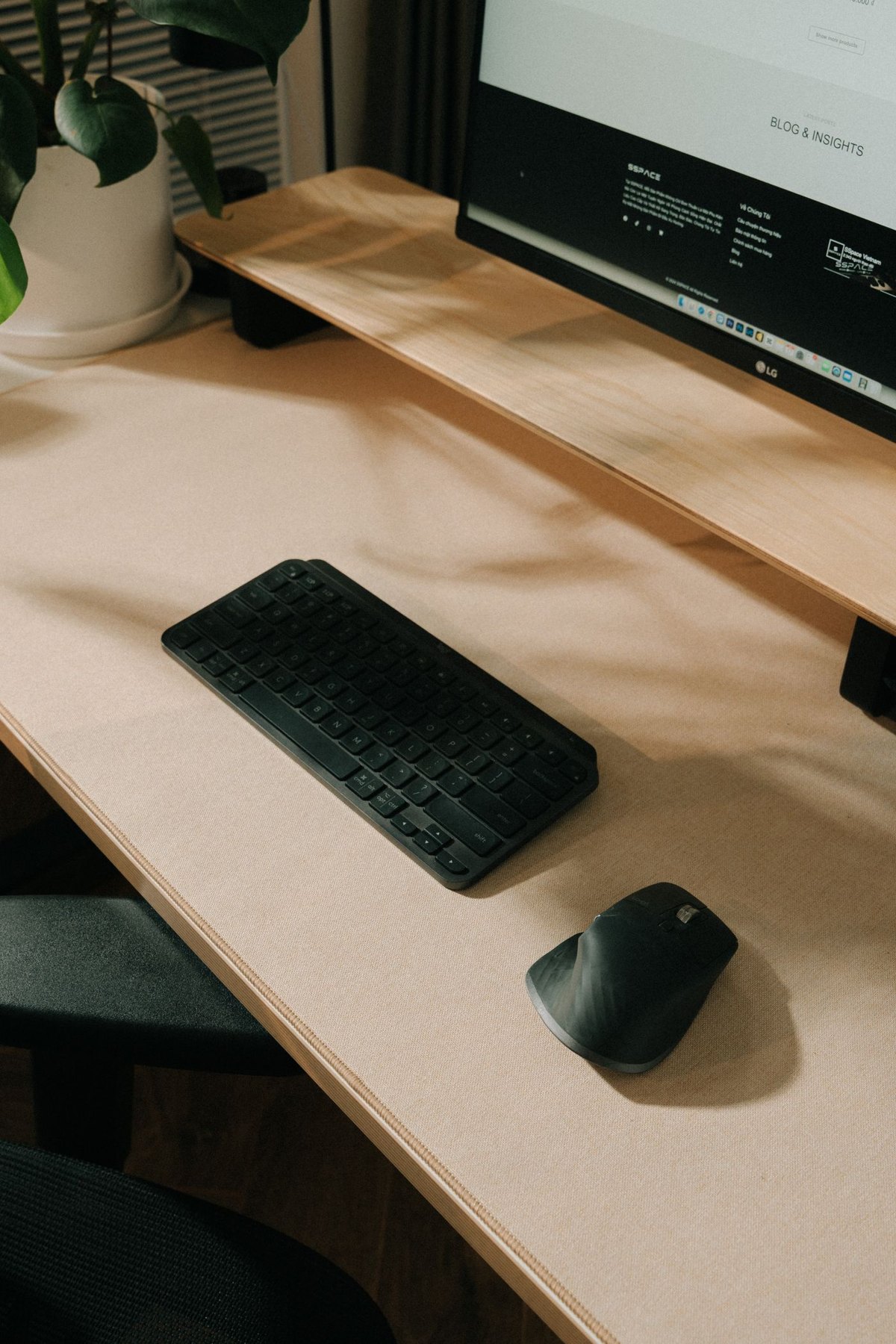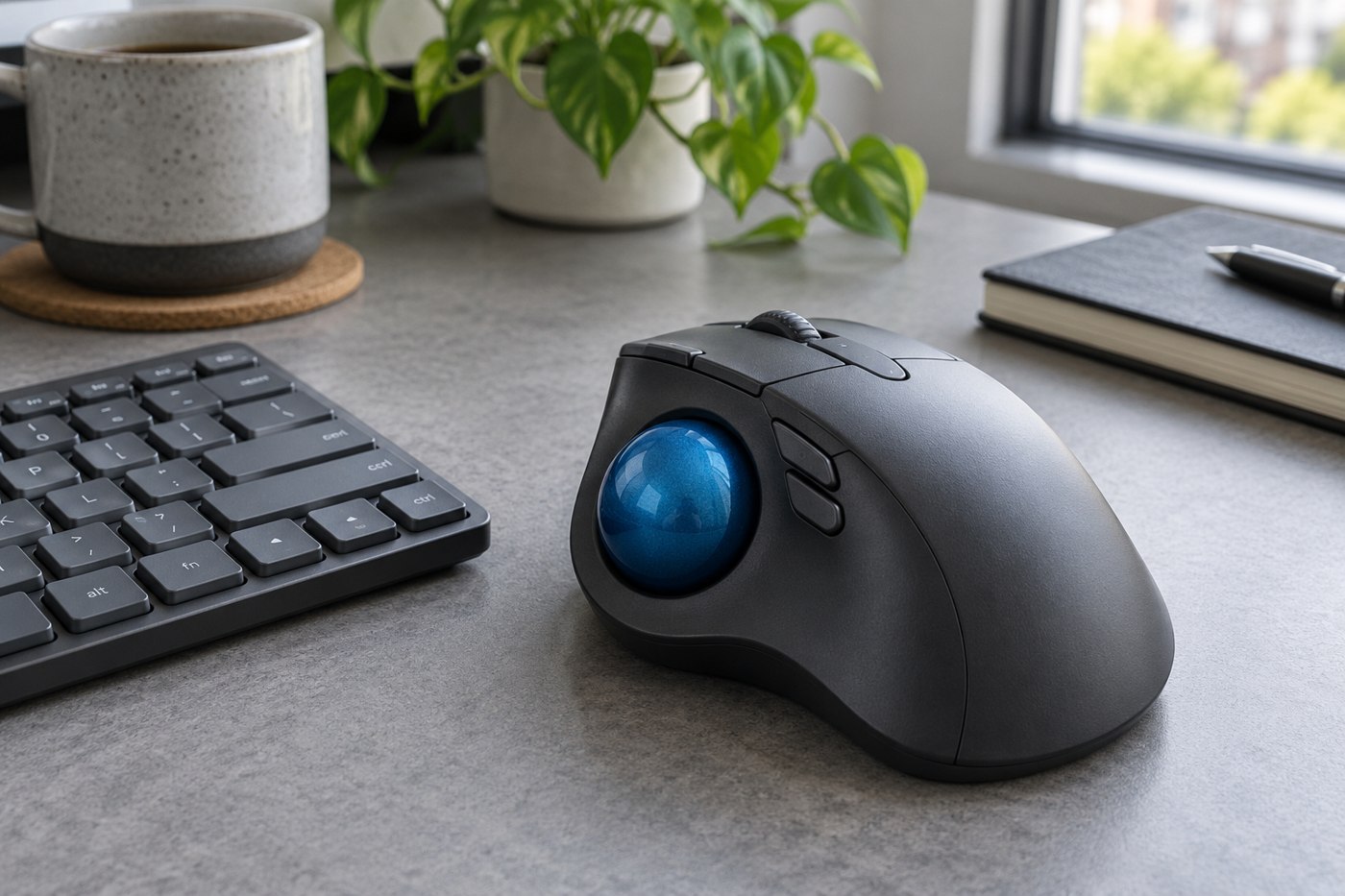
A trackball moves the pointer while its base stays in place. That can be useful on a narrow desk, but it changes the movements you use to control the computer. Choose it as a device to try with your own tasks, rather than assuming that a product described as ergonomic will suit every hand or working habit.
First decide whether you want to operate the ball mainly with a thumb or with fingers. Look at the whole button arrangement, not just the ball. A model may be shaped for a particular hand, while another allows a different position but puts frequently used controls farther away.
Test more than pointer movement
Dragging a file, selecting a sentence and scrolling a long page can feel different from simply moving across the desktop. Try those actions in applications you know. Check whether click-and-drag requires an awkward combination for you and whether scroll controls behave as expected.
Give yourself time to learn the controls, but distinguish unfamiliarity from a fit that feels wrong. A sensible return arrangement is helpful because a few minutes at a demonstration stand may not answer either question. If you experience discomfort, stop the trial rather than treating it as something you must overcome to justify the purchase.
Measure the space it really saves
The base remains still, but your hand and forearm still need room. Make a paper outline beside the keyboard and check whether the ball and buttons are reachable without the device being squeezed against another object. A large stationary base can occupy more desk area than a small mouse pad.
For shared use, consider settings. Pointer speed and button assignments that suit one person may confuse another. Verify whether customization requires software, whether it supports your operating system and whether installation is allowed on a managed computer.
Read the manufacturer's cleaning instructions as part of the purchase. Some models allow the ball to be removed for cleaning, but the method and tools vary. Do not pry at a ball based on instructions for a different device.
The trial succeeds when ordinary work becomes manageable with the available space and controls. It need not prove that a trackball is better for everyone, or that you must abandon a mouse entirely. Keeping different devices for different tasks is a reasonable result if that is what your own testing supports.