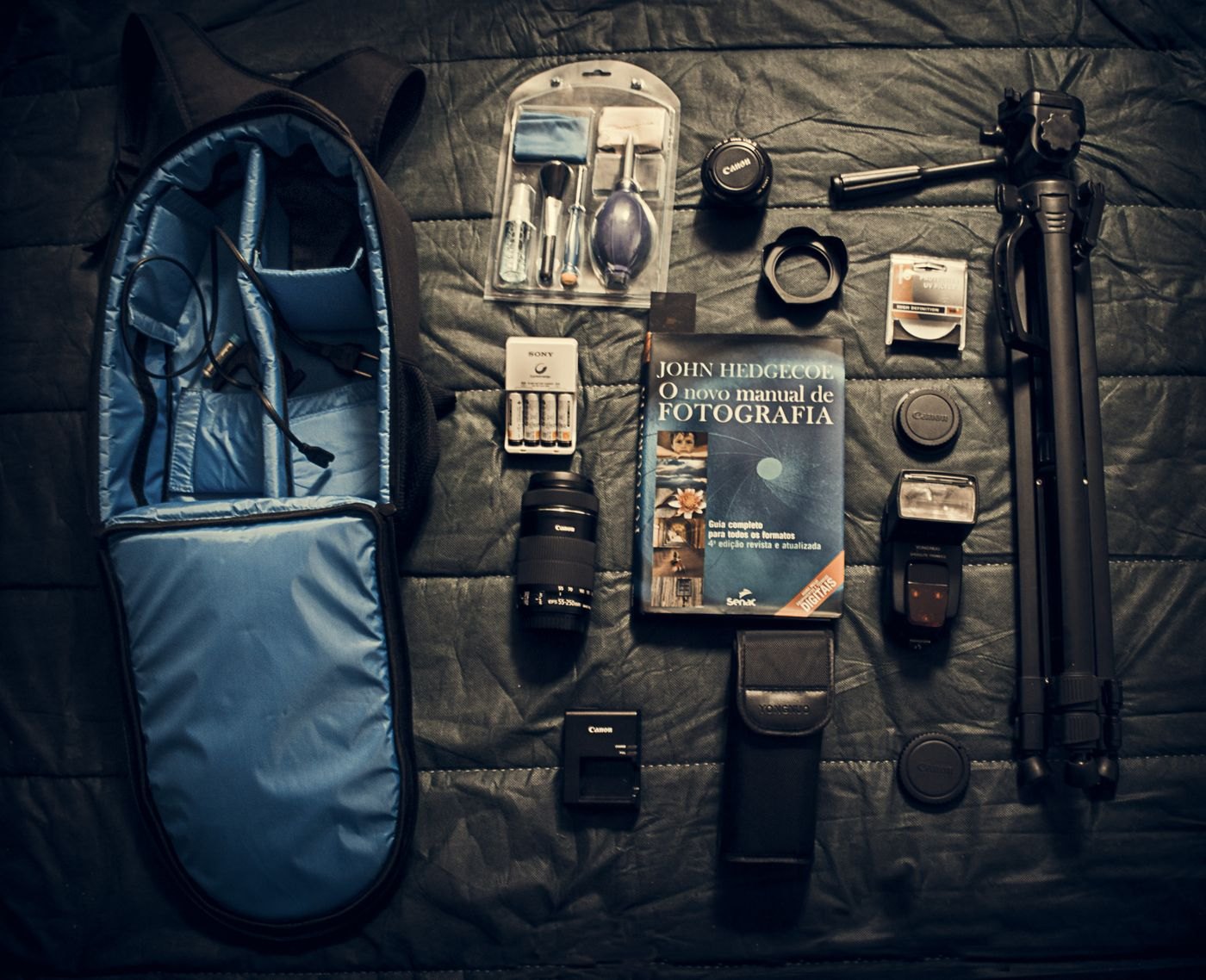
Empty your accessory pouch onto a table and separate the items by how they need protection. Memory cards need a different arrangement from cables; a lens accessory needs a different arrangement from a power adapter. A case with many identical pockets may look organised while serving none of those objects particularly well.
Measure the largest rigid item and the depth of its connector or plug. Check the usable pocket dimensions rather than the case's outer size. A zipper should close without pressing a metal plug into another device or sharply folding a cable at its connector.
Think about the smallest piece you cannot afford to lose. A tiny adapter can disappear into a deep mesh pocket, while a fitted compartment makes its absence obvious. Give that item a defined position and test whether it stays there when the closed case is turned over during normal carrying.
Pack in the order you use things
Put the items needed together near each other. A card reader and its required adapter belong in the same part of the case; cleaning materials should stay protected from dirty tools. Avoid mixing loose metal objects with screens or optical surfaces, even if there is spare space.
Do not fill every elastic loop merely because it exists. A little empty room makes it easier to remove one item without disturbing the whole arrangement. If the case is shared, label the special-purpose pieces so another person does not borrow the only cable that fits an essential device.
Keep batteries and power equipment according to their own manufacturers' transport instructions. A soft pouch is an organiser, not proof of protection against heat, crushing or liquid. Read the case's actual claims and do not infer them from a rugged appearance.
At home, note what you used, what you could not find and what repeatedly snagged. Remove obsolete adapters only after checking that they are not needed for an occasional device. Store those separately with a label rather than carrying them indefinitely or discarding them without a record.
The case is working when packing away takes a quick visual check: every necessary item has a place, and a missing piece is noticeable. A larger case is useful only if the contents need it; otherwise it can become a portable version of an unsearched drawer.